

FROM BRIAN’S BOOKSHELF
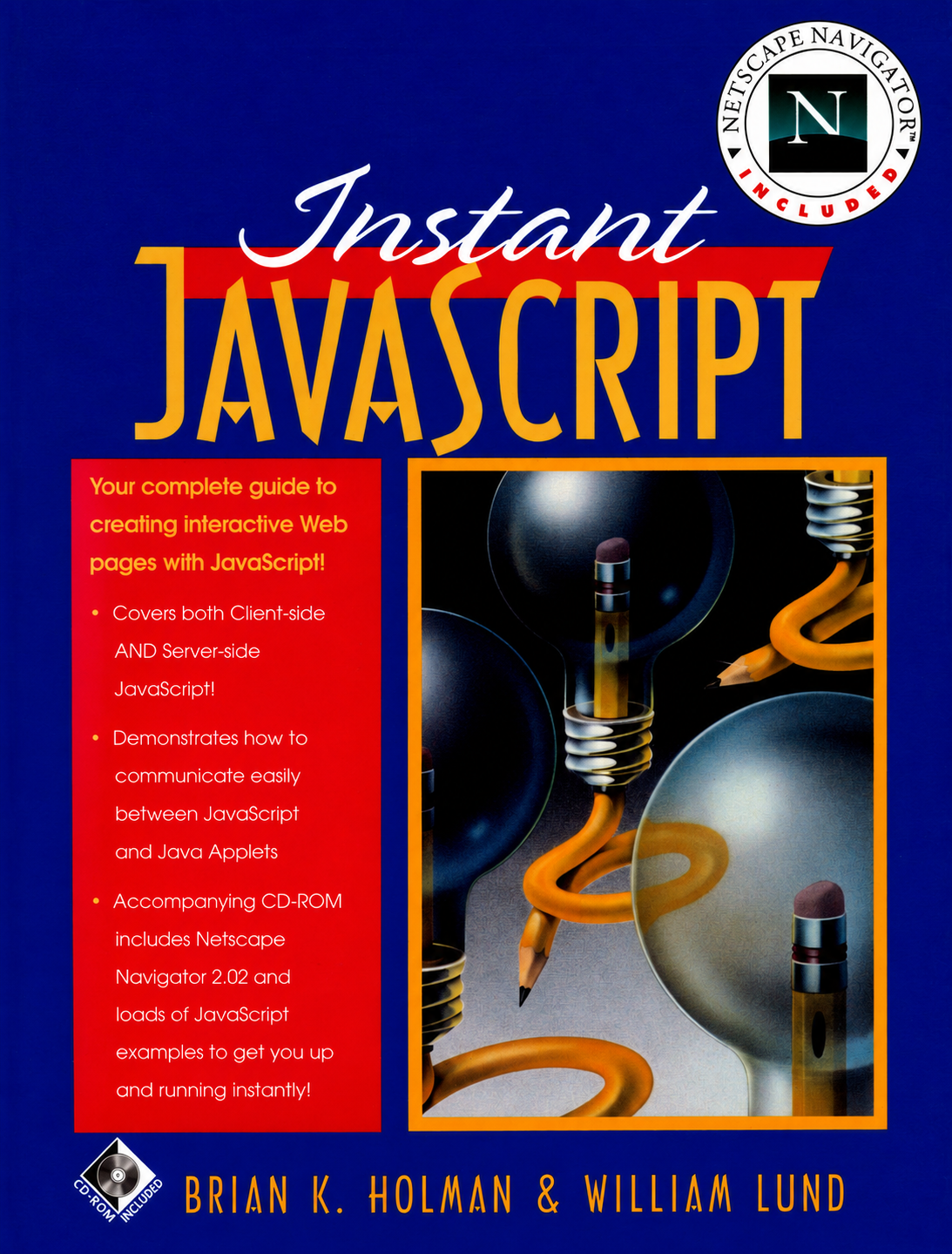
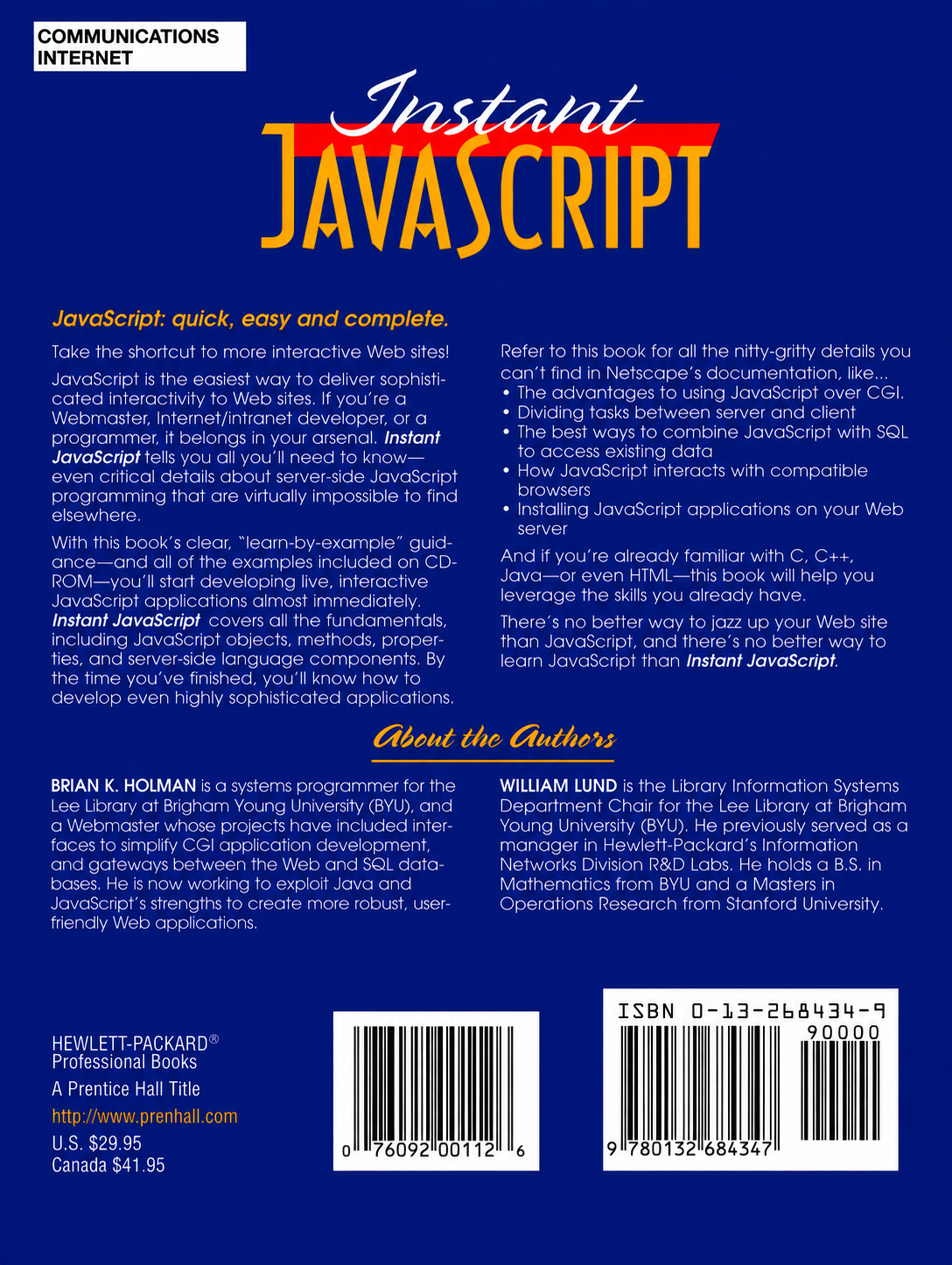
Instant JavaScript
A 1996 book. An early belief in one language for the browser and the server.
Co-authored by Brian K. Holman and William Lund, published by Prentice Hall in 1996. Brian’s contribution focused on server-side JavaScript.
JavaScript as a full-stack web development platform: A slow and bumpy ride across the chasm
By Brian K. Holman · Reflections on an earlier vision
Original Publication Date: May 2, 2015 · Updated: September 23, 2026
In 1996, William Lund and I co-authored Instant JavaScript for Prentice Hall, one of the earliest technical books to explore JavaScript. Alongside programming for the browser, it covered Netscape’s emerging server-side JavaScript platform—the focus of my contribution.
We were learning as we wrote: developing examples, testing ideas, and discovering the platform’s possibilities while the World Wide Web was expanding at a remarkable pace. There was little established practice to draw on. The work was an exploration of a new medium as much as an effort to explain a new language.
I was especially drawn to the simplicity and potential of using one language in both the web browser and the server. It offered a more connected way to build applications, and I became an enthusiastic advocate.
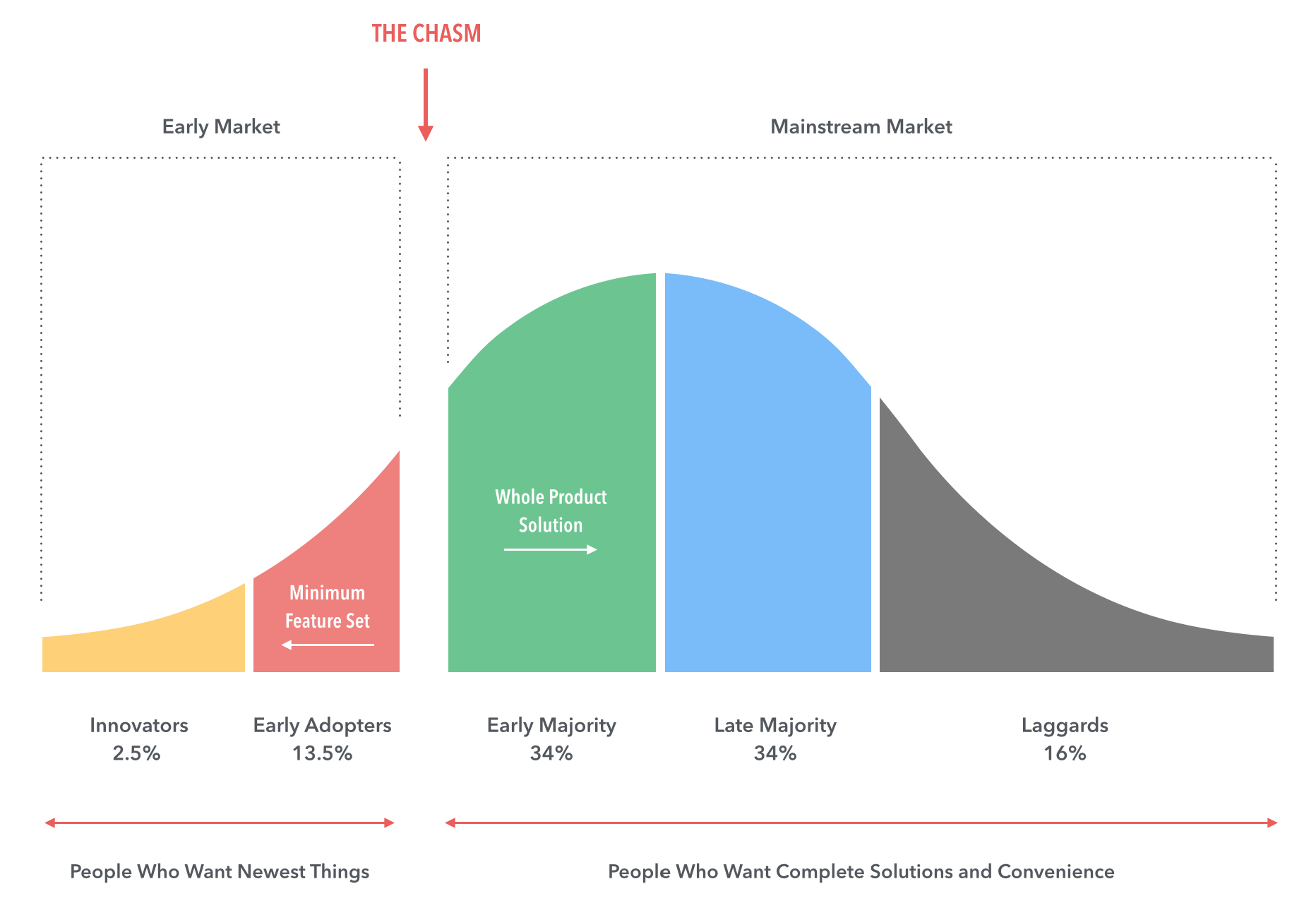
That promise took time to mature. As Netscape’s influence faded, other languages and platforms shaped server-side web development, while JavaScript became essential in the browser. The idea I had been excited about was still compelling, but the tools and ecosystem needed to carry it into widespread use had yet to come together. This was the challenge of crossing the “chasm” (a concept explored in Geoffrey A. Moore’s Crossing the Chasm): the distance between early enthusiasm and broad adoption. Early adopters can see past rough edges to imagine what a technology might become. For a wider audience, potential alone is not enough. Developers need reliable tools, clear documentation, and an ecosystem that makes the technology practical for everyday work.
An early vision, a modern foundation

Today, that vision has taken shape through a much broader ecosystem. Node.js provides a foundation for running JavaScript outside the browser, including the servers that power web applications. TypeScript builds on JavaScript with a type system that helps developers catch mistakes earlier and make larger codebases easier to understand and maintain. It translates to JavaScript, so it can be used on both sides of an application.

Frameworks such as Next.js bring these pieces together around React, supporting both the interfaces people interact with and work performed on the server. The modern JavaScript and TypeScript ecosystem has carried forward the browser-and-server vision I first explored with Netscape, with tools and capabilities far beyond what we had in 1996.
The enduring appeal is more than sharing a language. It is the ability to connect an idea, the experience someone sees, and the systems behind it with fewer barriers between them. That early interest still informs how I approach software architecture today: look for foundations that make complex capabilities more useful and understandable to the people who depend on them.
That same direction now informs WealthProof. Its engine is built on the modern JavaScript, TypeScript, and Node.js stack, bringing that long-standing interest in a shared foundation for browser and server into Dezota’s next chapter in consumer financial technology.